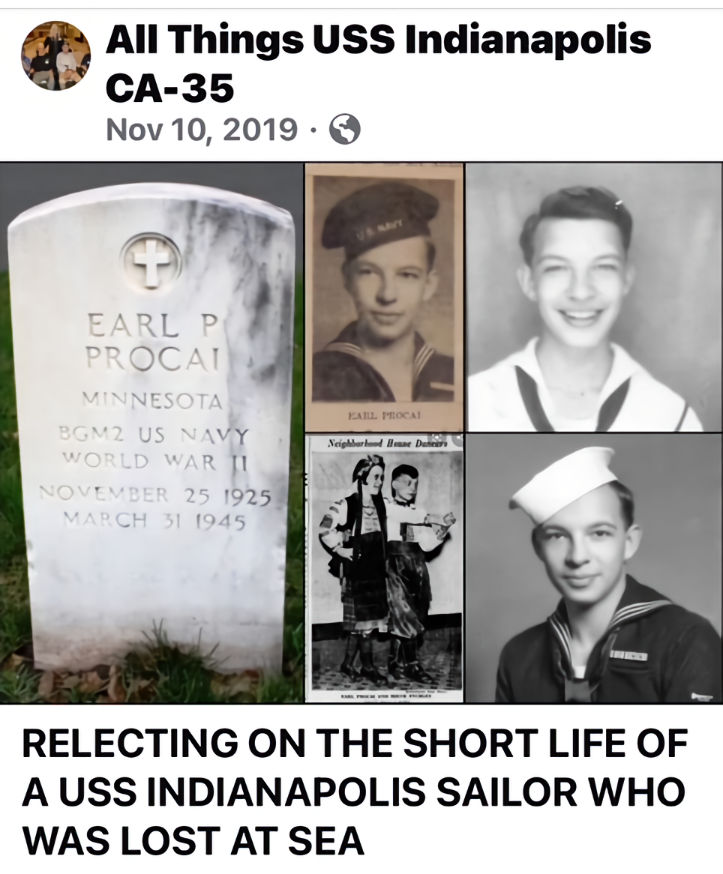
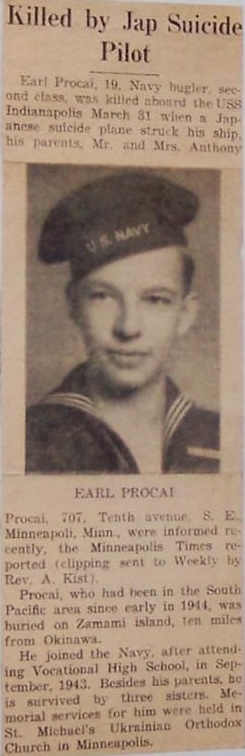
Rank / Rating: BUGLER 2-Bugler Second Class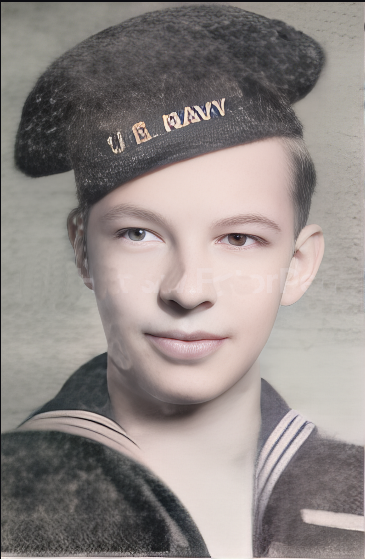
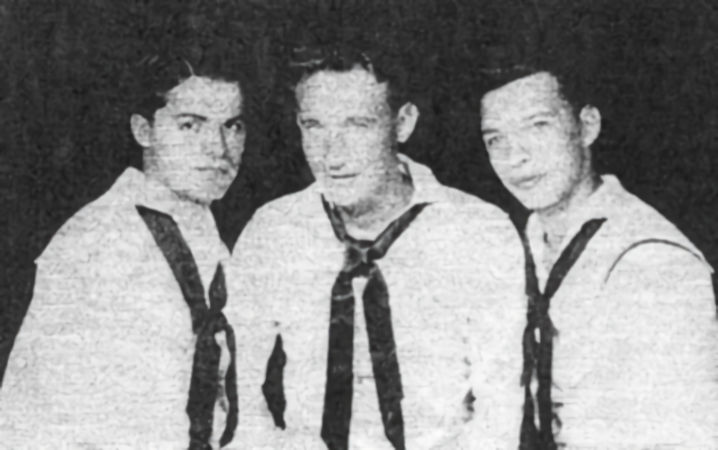 Earl attended Sheridan Elementary School and Edison High School m Minneapolis. He loved to play the piano which he learned by ear and he and his friends, Corny Kist and Boris Pylatiuk, even recorded some songs. When Earl was a young boy, he and his sister, Luba, found a beautiful, hand carved coffee table with a glass top at Cashway Furniture store. They saved their money and paid a small the table in full and were so happy they could bring home a Christmas present for their mom and dad.
Around the time Earl was eleven years old, he rode in a soap box derby and won a medal. Always the adventurous one, he and his friend, Boris, hitchhiked to New York City to visit his sister, Johanna, and her husband, Theodore, when Earl was a teenager.
He joined the Navy at his earliest opportunity and his friends remember the way he loved to tease people and joke around a lot. A friend and fellow bugler from the Navy, Glenn Morgan, remembers Earl as a fine young gentleman. Earl and Donald F. Mack, another bugler, came on the ship three months after Glenn Morgan and Calvin Ball Emory. Glenn got to know Earl very well because at first, Earl didn't know all the calls. They would go to the steering aft to practice. The steering aft was an area in the stern of the ship where the mechanism that moved the rudder was housed. There was lots of noise there but they could take their bugles and practice the calls. The buglers had different assignments. Glenn stood watch on the bridge and Earl was in a different area. Off Okinawa, every morning, the ship had "general quarters" where everyone would go to their battle stations until they received the all clear.
On the morning, March 31, 1945, Earl was not on deck when the ship was returning from Kerama Retto, a small group of islands fifteen miles west of the southern part of Okinawa. The islands had been taken by the United States military and were considered secure. Inside the islands was a large bay where the ships would gather. There had been an excursion to the islands the day before the invasion of Okinawa.**
Suicide plane attacks could happen anytime, but seemed most prevalent early in the morning. "Condition One" in the antiaircraft batteries was generally set at that time. I find time, no bogeys (suicide planes) were observed by radar, then condition three was set in the anti-aircraft batteries. "Condition three" meant that gunners manned the guns but they were not the regular assigned personnel used for that purpose. On the return trip to Okinawa, a light overcast prevailed. Glenn Morgan had taken his position on the bridge when without a warning a Japanese suicide plane bursts through the overcast screaming towards the bridge. It then seemed to level off somewhat and then dived into the stern area of the ship on the port side. The crumpled plane and a pilot were quickly pushed over the side by four personnel stationed in that area. The damage had been done. An armor piercing bomb continued to plow through the various decks exiting the bottom of the ship and the delayed action fuse caused the bomb to explode. This caused an imploding action on the hull, opening large holes in the steel plate, thus allowing water to quickly enter the ship.
After the impact, of course, they had to close the hatches immediately to keep the ship from sinking. Earl was pulled from one of the hatches just before it was closed and lived only five minutes before passing on. Eight other crew members died including Calvin Ball Emory, the other bugler.
The ship proceeded to Kerama Retto where she arrived at 1240. At 1400 the CLAMP (ARS33) moored alongside to port to assist with the inspection and temporary repairs.
At 1730 a burial service was held on board for Earl Procai, Bug2c. Earl was taken in a landing craft for his burial in the US Armed Forces Cemetery located on Zamami Shima, Kerama Retto, off the island of Okinawa, where Glenn Morgan played taps for him. Four quarter masters were killed and two buglers, (*six of the Nan Division) as well as three men from different divisions.
Another memory that Glenn has of his fellow bugler is the bushing piece that Earl gave him. Glenn took his cornet on the ship that was purchased for $91.00 by his brother when Glenn was in high school. Glenn was drafted after he got out of high school and always used a mouthpiece but Earl gave him a bushing that could fit into either a trumpet or a cornet. He kept it all these years. Glenn and Earl served together on the USS Indianapolis for about a year before Earl's death.
Notes and Addition by Admin:
**Note: Indy was not "returning from Kerama Retto, a small group of islands fifteen miles west of the southern part of Okinawa" on the morning of March 31, 1945.
The deck log records the following ship's movements:
On March 30th, at 0925 Commenced firing 5 inch battery and continued until 1130 when mission was completed. Recovered "our spotting plane" and cleared the area at 1140 and proceeded to Kerma Retto anchorage to replenish ammunition. Anchored in berth K34 at 1405.
At 1643, Underway with SAN FRANCISCO, COLORADO, NEVADA and NEW YORK and screening DD's. Rear Adm C. T. Joy, ComCruDiv6 in SAN FRANCISCO, OTC, and proceeded to rendezvous with TU 54.3.2 for night retirement. Retired to the NW during the night.
March 31, 1945 - 0612 released from formation and took station astern SALT LAKE CITY as a unit of Fire Support Unit 54.1.5 (Rear Adm A. E. Smith, CTU 54.1.5 and ComCruDiv5). At 0707 ship was 11.5 miles from ZANPA MISAKI, OKINAWA, in column astern SALT LAKE CITY, distance 1,000 yards.
After the war, families were given the opportunity to request that the remains of their loved one be returned to the US for reinterment.
Procai was re-interred at Fort Snelling National Cemetery, Minneapolis, Hennepin Co., MN, on May 19, 1949 - Section C-3, Grave 7924.
In 2018, Earl was honored in VOICES OF THE LOST AT SEA. View from Time Stamp 22:22 - 26:01.
Learn more about the kamikaze attack and the nine men who died.
Earl attended Sheridan Elementary School and Edison High School m Minneapolis. He loved to play the piano which he learned by ear and he and his friends, Corny Kist and Boris Pylatiuk, even recorded some songs. When Earl was a young boy, he and his sister, Luba, found a beautiful, hand carved coffee table with a glass top at Cashway Furniture store. They saved their money and paid a small the table in full and were so happy they could bring home a Christmas present for their mom and dad.
Around the time Earl was eleven years old, he rode in a soap box derby and won a medal. Always the adventurous one, he and his friend, Boris, hitchhiked to New York City to visit his sister, Johanna, and her husband, Theodore, when Earl was a teenager.
He joined the Navy at his earliest opportunity and his friends remember the way he loved to tease people and joke around a lot. A friend and fellow bugler from the Navy, Glenn Morgan, remembers Earl as a fine young gentleman. Earl and Donald F. Mack, another bugler, came on the ship three months after Glenn Morgan and Calvin Ball Emory. Glenn got to know Earl very well because at first, Earl didn't know all the calls. They would go to the steering aft to practice. The steering aft was an area in the stern of the ship where the mechanism that moved the rudder was housed. There was lots of noise there but they could take their bugles and practice the calls. The buglers had different assignments. Glenn stood watch on the bridge and Earl was in a different area. Off Okinawa, every morning, the ship had "general quarters" where everyone would go to their battle stations until they received the all clear.
On the morning, March 31, 1945, Earl was not on deck when the ship was returning from Kerama Retto, a small group of islands fifteen miles west of the southern part of Okinawa. The islands had been taken by the United States military and were considered secure. Inside the islands was a large bay where the ships would gather. There had been an excursion to the islands the day before the invasion of Okinawa.**
Suicide plane attacks could happen anytime, but seemed most prevalent early in the morning. "Condition One" in the antiaircraft batteries was generally set at that time. I find time, no bogeys (suicide planes) were observed by radar, then condition three was set in the anti-aircraft batteries. "Condition three" meant that gunners manned the guns but they were not the regular assigned personnel used for that purpose. On the return trip to Okinawa, a light overcast prevailed. Glenn Morgan had taken his position on the bridge when without a warning a Japanese suicide plane bursts through the overcast screaming towards the bridge. It then seemed to level off somewhat and then dived into the stern area of the ship on the port side. The crumpled plane and a pilot were quickly pushed over the side by four personnel stationed in that area. The damage had been done. An armor piercing bomb continued to plow through the various decks exiting the bottom of the ship and the delayed action fuse caused the bomb to explode. This caused an imploding action on the hull, opening large holes in the steel plate, thus allowing water to quickly enter the ship.
After the impact, of course, they had to close the hatches immediately to keep the ship from sinking. Earl was pulled from one of the hatches just before it was closed and lived only five minutes before passing on. Eight other crew members died including Calvin Ball Emory, the other bugler.
The ship proceeded to Kerama Retto where she arrived at 1240. At 1400 the CLAMP (ARS33) moored alongside to port to assist with the inspection and temporary repairs.
At 1730 a burial service was held on board for Earl Procai, Bug2c. Earl was taken in a landing craft for his burial in the US Armed Forces Cemetery located on Zamami Shima, Kerama Retto, off the island of Okinawa, where Glenn Morgan played taps for him. Four quarter masters were killed and two buglers, (*six of the Nan Division) as well as three men from different divisions.
Another memory that Glenn has of his fellow bugler is the bushing piece that Earl gave him. Glenn took his cornet on the ship that was purchased for $91.00 by his brother when Glenn was in high school. Glenn was drafted after he got out of high school and always used a mouthpiece but Earl gave him a bushing that could fit into either a trumpet or a cornet. He kept it all these years. Glenn and Earl served together on the USS Indianapolis for about a year before Earl's death.
Notes and Addition by Admin:
**Note: Indy was not "returning from Kerama Retto, a small group of islands fifteen miles west of the southern part of Okinawa" on the morning of March 31, 1945.
The deck log records the following ship's movements:
On March 30th, at 0925 Commenced firing 5 inch battery and continued until 1130 when mission was completed. Recovered "our spotting plane" and cleared the area at 1140 and proceeded to Kerma Retto anchorage to replenish ammunition. Anchored in berth K34 at 1405.
At 1643, Underway with SAN FRANCISCO, COLORADO, NEVADA and NEW YORK and screening DD's. Rear Adm C. T. Joy, ComCruDiv6 in SAN FRANCISCO, OTC, and proceeded to rendezvous with TU 54.3.2 for night retirement. Retired to the NW during the night.
March 31, 1945 - 0612 released from formation and took station astern SALT LAKE CITY as a unit of Fire Support Unit 54.1.5 (Rear Adm A. E. Smith, CTU 54.1.5 and ComCruDiv5). At 0707 ship was 11.5 miles from ZANPA MISAKI, OKINAWA, in column astern SALT LAKE CITY, distance 1,000 yards.
After the war, families were given the opportunity to request that the remains of their loved one be returned to the US for reinterment.
Procai was re-interred at Fort Snelling National Cemetery, Minneapolis, Hennepin Co., MN, on May 19, 1949 - Section C-3, Grave 7924.
In 2018, Earl was honored in VOICES OF THE LOST AT SEA. View from Time Stamp 22:22 - 26:01.
Learn more about the kamikaze attack and the nine men who died.